
Wolverine
Weasel Family
Classification: Fur Bearing Wildlife Species
Gulo gulo
Order:
Carnivora
Family:
Mustelidae
Other Names: Devil bear, carcajou, skunk bear, devil beast.
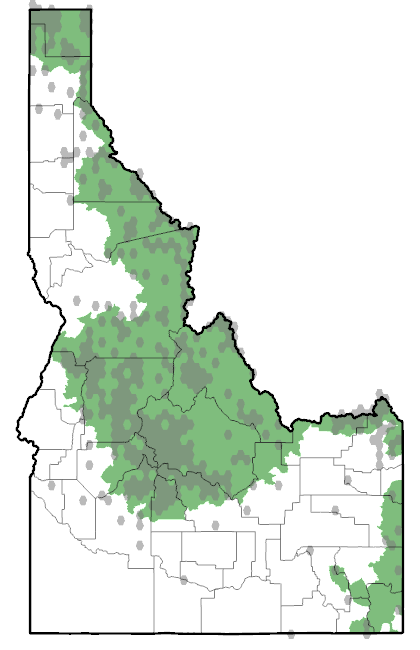
Status: Wolverine fur is highly valued and widely used in the Arctic and sub-Arctic as ruffs or trim on parkas and other garments. The most viable and widespread population of wolverines in the contiguous 48 states occurs in the Rocky Mountains of Idaho. Protected furbearer. Harvest is not allowed.
Note: The wolverine was given 'Threatened' status under the Endangered Species Act on November 29, 2023.
Total length: 35 to 54 inches. Weight: 11 to 33 pounds.
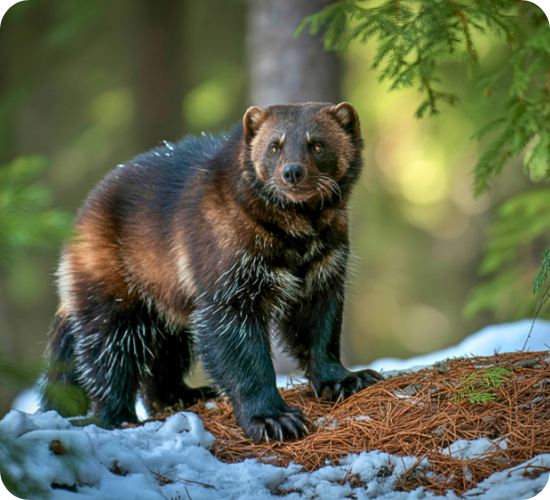
Identifying Characteristics: Except for its bushy tail, the wolverine looks like a small bear. Compact and strongly built. Medium brown to almost black in color. Color is paler on the head; two broad, yellowish stripes that start at shoulders and join on rump. Often displays white or light tan patch markings on the throat and chest. Feet are large in relation to size of body. Largest terrestrial member of the weasel family.
Total length: 31 to 51 inches. Weight: 35 to 60 pounds.
Habitat: The primary wolverine habitat in Montana is the coniferous forest types of the Rocky Mountains. Roams large areas in solitude. Mainly animals of the heavy forest.
Food Habits: A very opportunistic feeder. Generally a carnivore, will also feed on meat carrion and berries. Famous for robbing traps and food caches of trappers. When necessary, can kill animals many times its own size.
Life History: Active day or nights. Except for the breeding season exhibits solitary habits. General behavior is similar to other mustelid predators. Dens in any sheltered place. Breeds during summer; litters from 1 to 5 young are born between February and April. Exhibits delayed implantation of the fertilized egg.
Similar Species: Fisher - no yellowish body stripes.
Characteristics
The wolverine is a powerfully built, long haired
animal, somewhat resembling a small short legged
bear, with markings similar of those of a skunk. The
back is arched, and the tail is bushy. The feet are
large and well furred, with long, non-retractile
claws.
Males are 31 to 51 inches long, including a 8 to 9 inch tail. They stand 12 to 14 inches at the shoulder and weigh 35 to 60 pounds. Females are about one quarter smaller.
Because of its size, stocky form, and long coat, the wolverine cannot be easily mistaken for any other mammal.
The head is broad and short snouted with small, rounded ears, small eyes, massive teeth, and powerful jaws. The neck is short and powerfully muscled, as are the shoulders. The senses of smell and hearing are good but sight is poor.
The fur is long, with coarse guard hairs and thick underfur when prime. The color and texture varies with the individual. Usually, they are dark brown above the pale lateral stripes which run from shoulders to rump, merging at the rump and extending along the top of the tail. In some individuals, the contrast is very distinct while in others it is faint.
The under parts are dark, often with irregular white or orange markings at the throat and a bright orange patch on the belly, indicating the location of a gland.
The wolverine walks in a flat footed manner. The hind feet in fact, resemble the feet of a man. It travels in several gaits but a sort of run with long, bounding strides is the most common. It is not a particularly fast runner but can travel tirelessly over long distances.
The wolverine is a courageous animal which is respected and avoided by other predators. Even cougar and grizzly bear have been known to abandon a kill on the approach of a wolverine. Wolverines will often urinate on carcasses, fouling them so that no other animal will eat them.
Life Cycle
Both sexes reach sexual maturity during their
second summer. Mating is said to take place from
April to October. A delayed implantation occurs,
with an active gestation period of 60 days. The
young are born in late March or early April. One to
four young are born in dens located under protective
rock slides, natural caves, under the roots of trees
or windfalls.
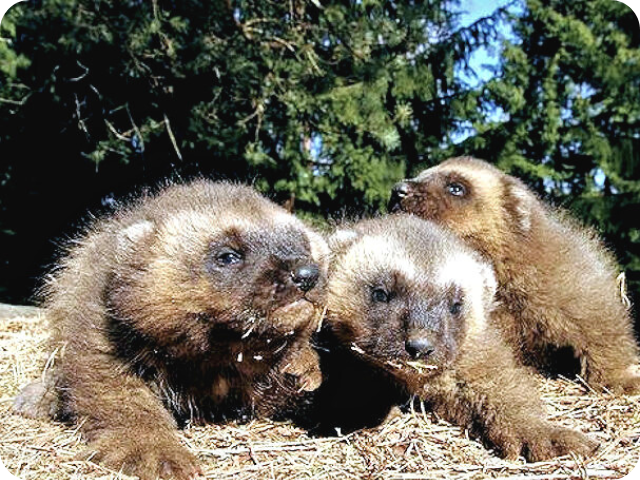
The young are covered with fine white hair. The females gives the young extensive care for up to one year, after which she drives them from her territory.
Food
Wolverines mainly eat the flesh of mammals or birds.
Wolverines are generally too large to subsist well
on small game, too small to effectively kill large
game regularly and too slow to pursue swift animals.
As a result, they often resort to scavenging
carrion. Often, they subsist almost entirely on
winter killed animals or the kills of other
predators. This habit also attracts them to trap
areas where trapped or dead animals are more
available. The wolverine will hunt and kill whenever
the opportunity presents itself and they are
tireless and persistent in their hunting activities.
They will take a wide variety of foods, including
hares, mice, lemmings, ground squirrels, chipmunks,
marmots and beaver. Berries are often eaten in late
fall. When food is scarce, the wolverine will
attempt to kill big game animals and there are
authentic records of attacks upon mountain goats,
moose, deer and elk.
Habits
Little is known about the habits of the wolverine.
Due to its poor eyesight, it has been noted to come
within 50 to 60 yards of man before becoming
alarmed. If not absolutely sure of what lies ahead,
it will sit on its haunches and shade its eyes with
its forepaws, just as a human would do if
scrutinizing a dim or distant object.
Wolverines avoid water or even heavy rain if possible, but will cross small water obstacles when necessary. Its habits of following trap areas, robbing bait, kill, and eating trapped animals while avoiding capture has caused problems for trappers.
Wolverines are most active at night but will travel in daylight, especially in winter. They are normally solitary and very intolerant of each other except during the breeding season. They have large territories and will periodically travel great distances.
Population
Wolverine are never abundant but are sparsely
scattered over extensive areas. As a result, they
seem to maintain a stable but low population most of
the time. They need wilderness areas where they can
avoid conflicts with man.
The most viable and widespread population of wolverines in the contiguous 48 states occurs in the Rocky Mountains of Montana, Idaho and Wyoming.
Habitat
The wolverine is a creature of the northern
wilderness, frequenting heavily wooded, broken,
rugged, and mountainous areas. The primary wolverine
habitat in Idaho is the coniferous forest types of
the Rocky Mountains. Wilderness is an essential
habitat component as it requires large areas to roam
over in solitude.
Economic Value
The fur of the wolverine is extremely durable, but
is generally too long and the leather too heavy to
be used for coats. Most are sold for parka trim
because it does not mat and frost up as much as most
furs. The hoar frost can be easily brushed out of
the fur. The fur is highly valued and widely used in
the Arctic and sub-Arctic as ruffs or trim on parkas
and other garments. Distinctively colored
individuals are in high demand for rugs or for
mounting. They generally command a fairly high price
because of their rarity.
Distribution and
Status
Wolverine occur in the northern
areas of Idaho in the Rocky Mountain range. They
are currently listed as threatened on the Endangered
Species Act with no active trapping or harvest allowed.