
Canda Lynx
Cat Family
Classification: Fur Bearing Wildlife Species
Felis lynx
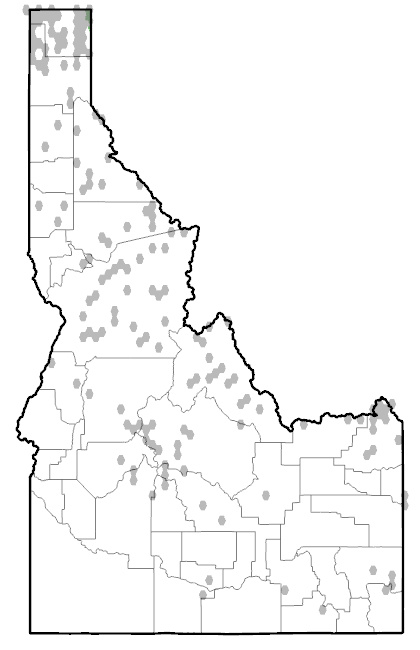
Status: Internationally important component of the wild fur industry. Very valuable fur animal. Protected furbearer. Harvest is not allowed.
Note: The lynx was given 'Threatened' status under the Endangered Species Act on March 24, 2000.
 Identifying Characteristics
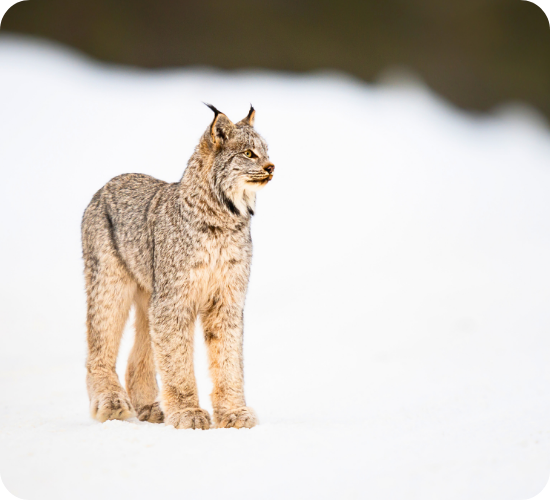
Noticeably larger than the bobcat. This medium-sized cat has large feet and long legs in proportion to its body size. A very short tail. Winter pelage is a grizzled grayish-brown mixed with buff or pale brown. The belly, legs, and feet are grayish-white or buff white. The light fur of the underparts makes lynx pelts so valuable. Very broad paws produce a snowshoelike effect that enables the animal to traverse deep snow easily. Dense fur tends to exaggerate body size.
Total length: 28 to 37 inches. Weight: Approximately 35 pounds.
HabitatForested areas, swamps. Good snowshoe hare habitat is good lynx habitat. Snowshoe hares prefer diverse forest with alternate stands of conifer cover and shrubby openings for feeding. Lynx is a species of the heavy forest.
Food HabitsLynx feed almost entirely on snowshoe hares. Other foods include mice, squirrels, and grouse. Only snowshoe hares can support high-density lynx populations.
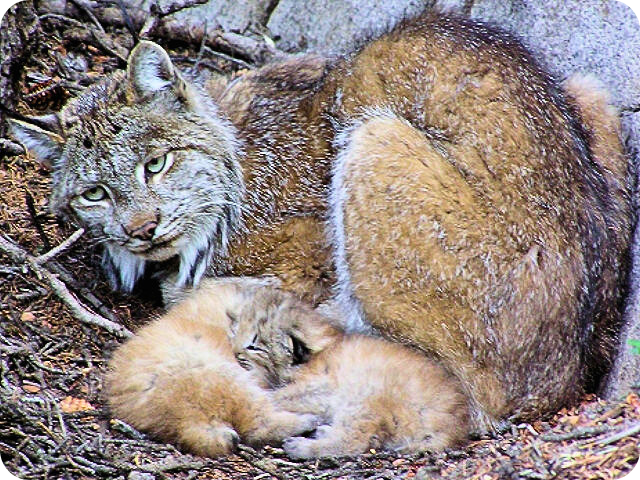
Life HistoryPrimarily nocturnal and solitary. Secretive and difficult to observe in the wild as lynx prefer higher altitudes and area away from civilization. Mates during spring; young are born during May and June after a 62 day gestation. Litter size is from one to four and averages two. Dens in hollow logs, beneath roots, and other sheltered places. The near total dependency on snowshoe hares for food has locked lynx populations into the snowshoe hare life cycle.
Similar SpeciesBobcat - paws are much larger and legs longer than bobcat. Lynx has a lighter, less spotted, pelage. Tip of the tail on the lynx is all black. Lynx has long tufts of hair on the ear tips. Black fur on the back of the lower hind legs of the bobcat contrasts with the lighter beige fur of the lynx.
CLOSED SEASON. Accidentally trapped
and released lynx (uninjured) must be reported to a
designated Fish and Game employee within
five (5) days of release. Trappers that accidentally
capture a lynx that cannot be released uninjured
must immediately notify a designated Fish and Game employee for assistance to determine
disposition and/or collection of the animal. It is
unlawful for any person to retain possession of a
furbearer after a species limit has been met, a
trapping district quota has been reached, or a
season is closed.